Coloring
Bird Coloring Pages: 8 Birds to Color in Their True Colors
Eight free bird coloring pages for kids: an owl, a robin, a hummingbird, a parrot, a duck with ducklings, a penguin, a nest with eggs and a flamingo.
Our sheets are free. The clipart shown alongside them is sold on Creative Fabrica; those links are affiliate links; a sale may pay the gallery a commission.
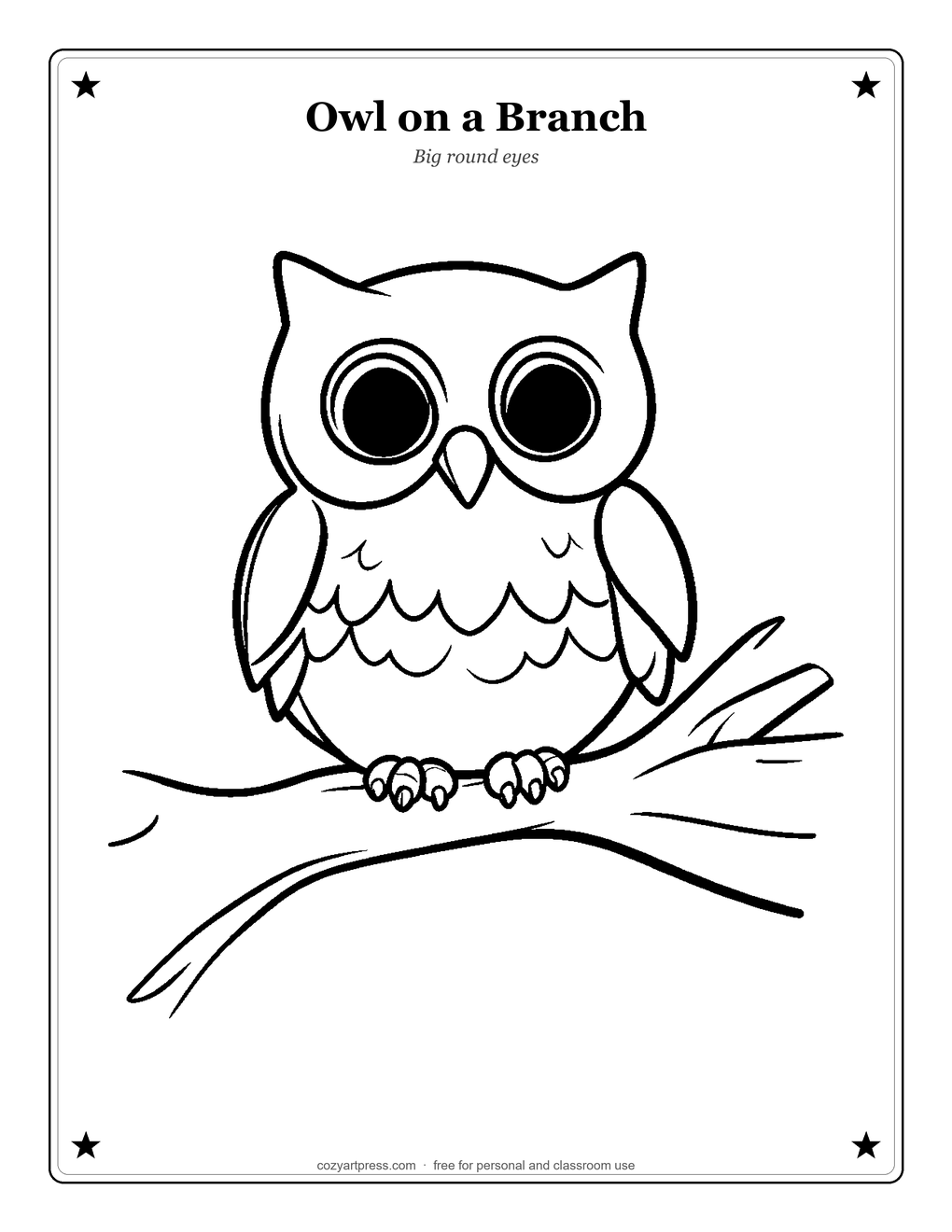
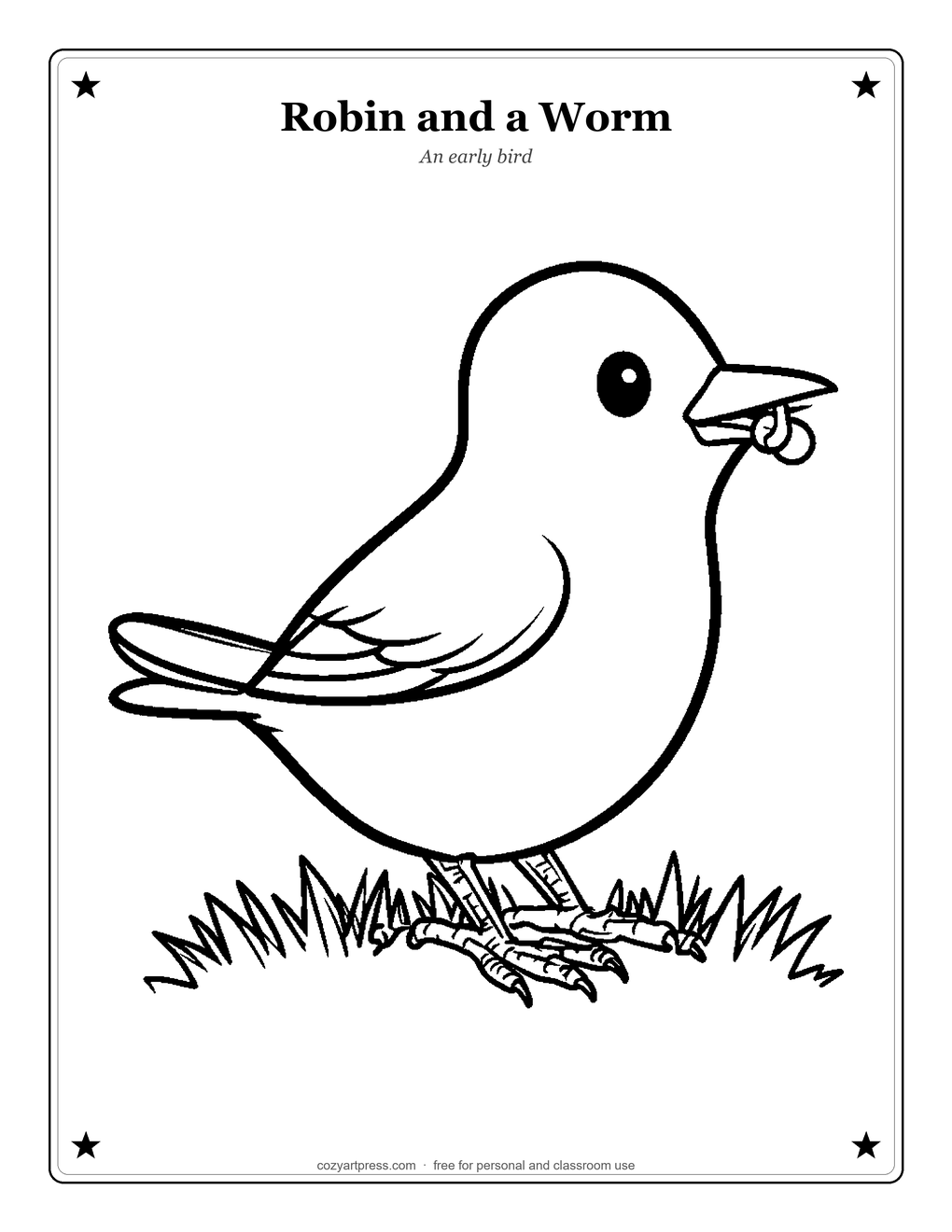
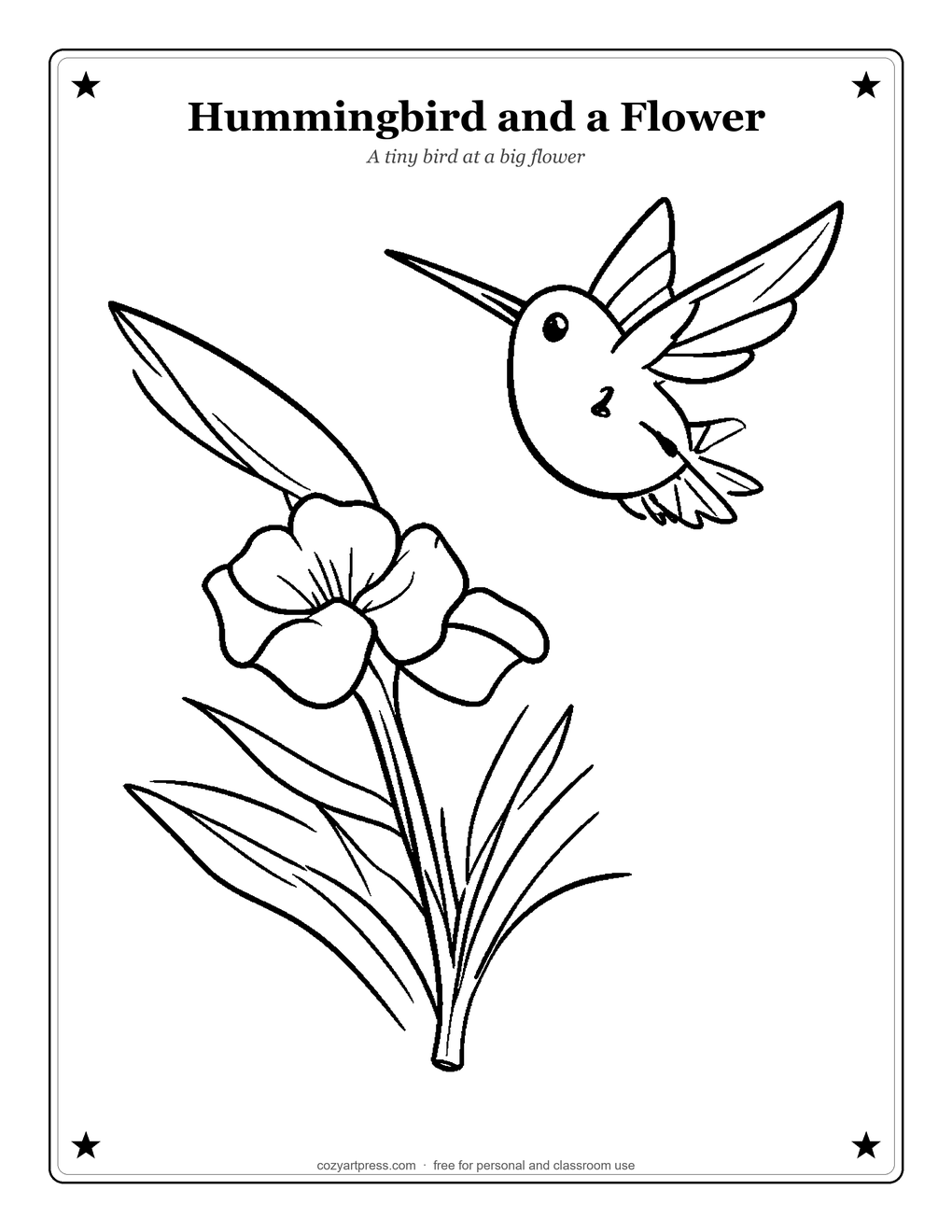
These 8 bird coloring pages are a small field guide in outline: an owl on a branch, a robin pulling up a worm, a hummingbird at a flower, a long-tailed parrot, a mother duck ferrying two ducklings across a pond, a penguin on an ice block, a nest of eggs with a small bird perched on the rim, and a flamingo balanced on one leg. Each bird comes with its true colors and one fact below, so a child can color it the way it looks in the wild, then go looking for the real thing out the window.
Pick single pages or the combined file with all eight. The outlines are drawn for letter-size paper in black ink, and you may copy them for home or school.
Free PDF · 8 pages · US Letter
The sheets
Click a sheet to open its PDF. Print at 100% scale (or fit to page on A4).
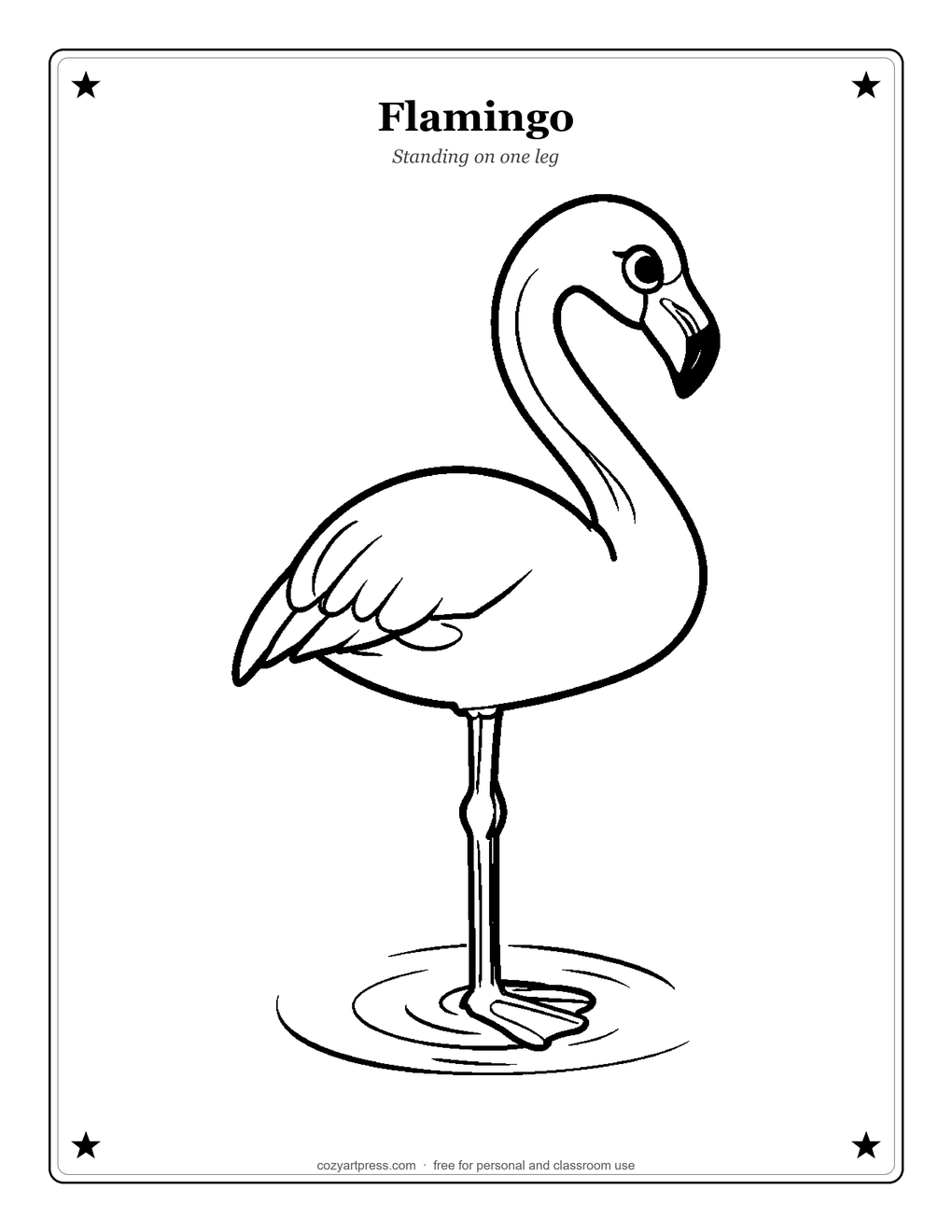
Download the whole set as one PDF — 8-page PDF.
01 —From Big Shapes to Fine Feathers
A few of these birds are built from three or four large shapes. Others have skinny legs, narrow wings or a tangle of small spaces. Start a young child at the top of the list and work down.
| Page | What the child colors | Suits |
|---|---|---|
| Owl on a Branch | Big round eyes, a short branch | Toddlers |
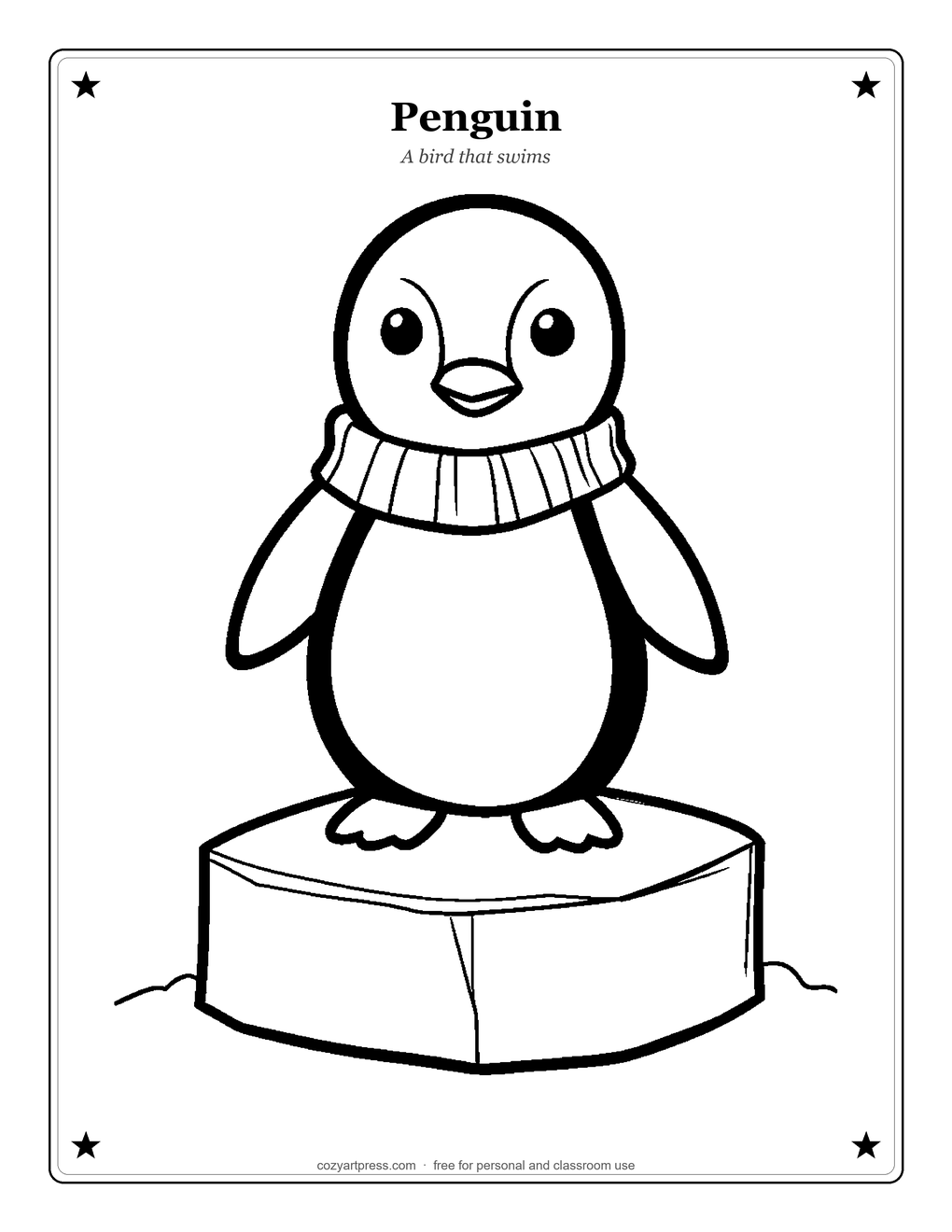
| Penguin | A round body, a scarf, a block of ice | Toddlers |
| Robin and a Worm | One bird on a patch of grass | Preschoolers |
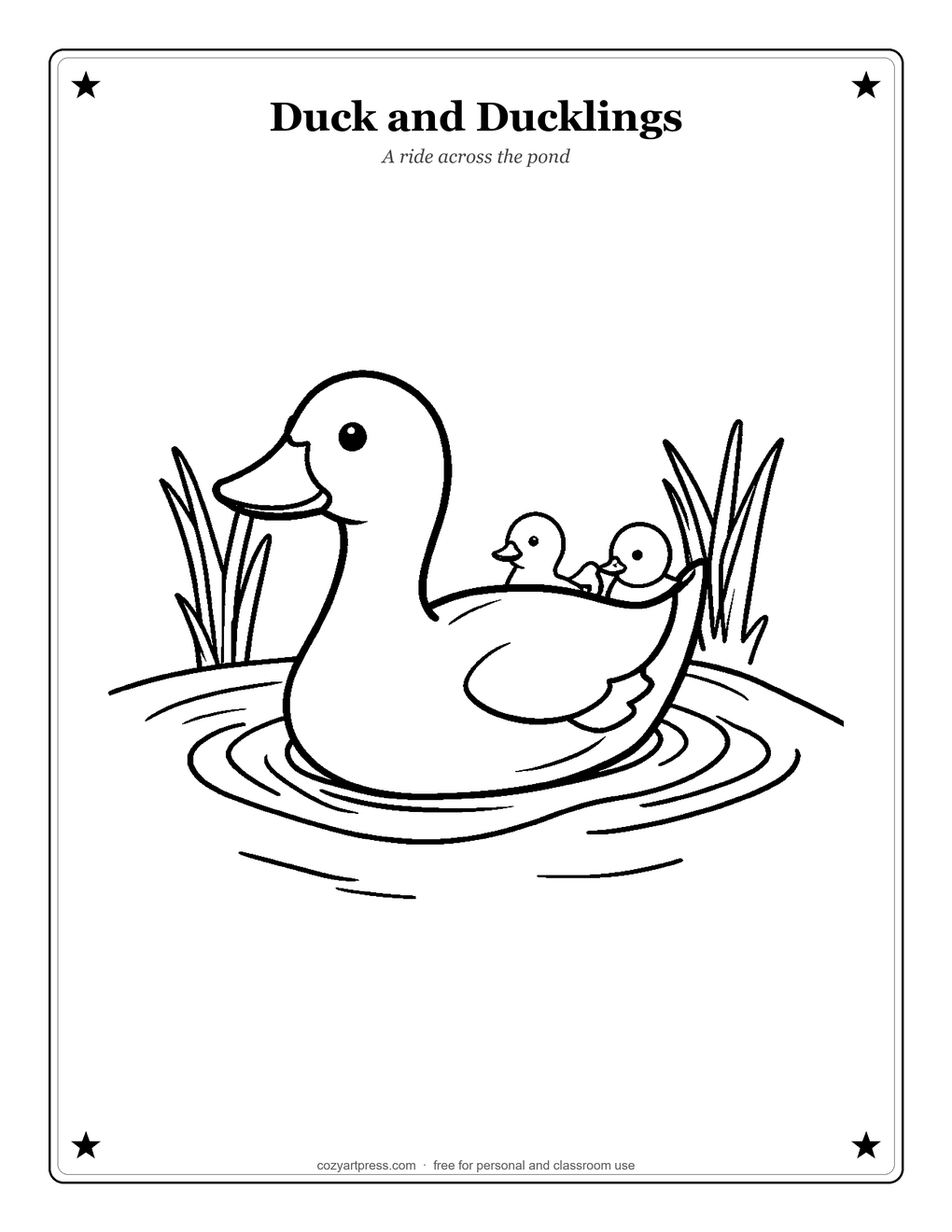
| Duck and Ducklings | A mother duck, two ducklings, a pond | Preschoolers |
| Flamingo | Long neck, one leg, a ring of water | Ages 4 and up |
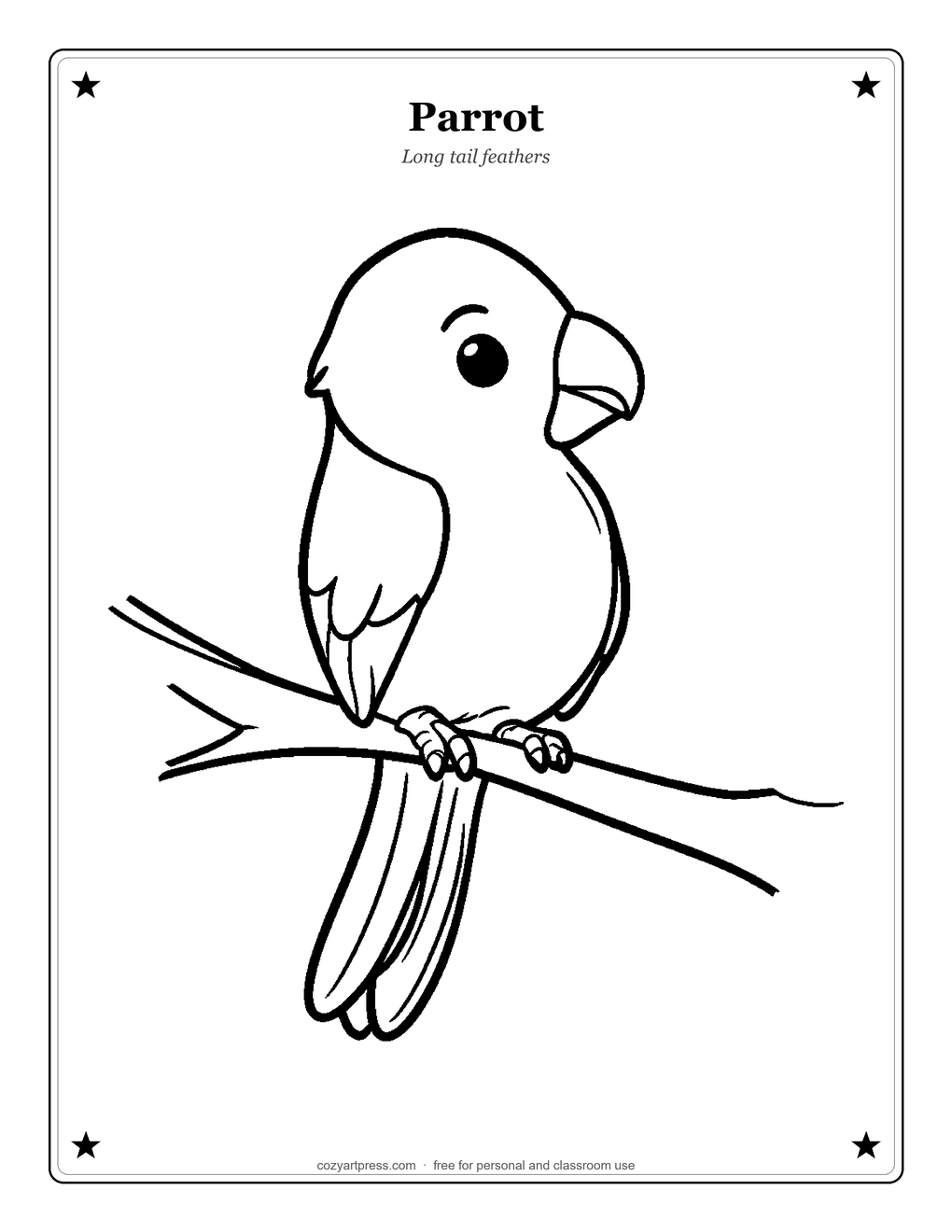
| Parrot | Long tail feathers on a branch | Ages 5 and up |
| Hummingbird and a Flower | Thin wings, a flower and leaves | Ages 6 and up |
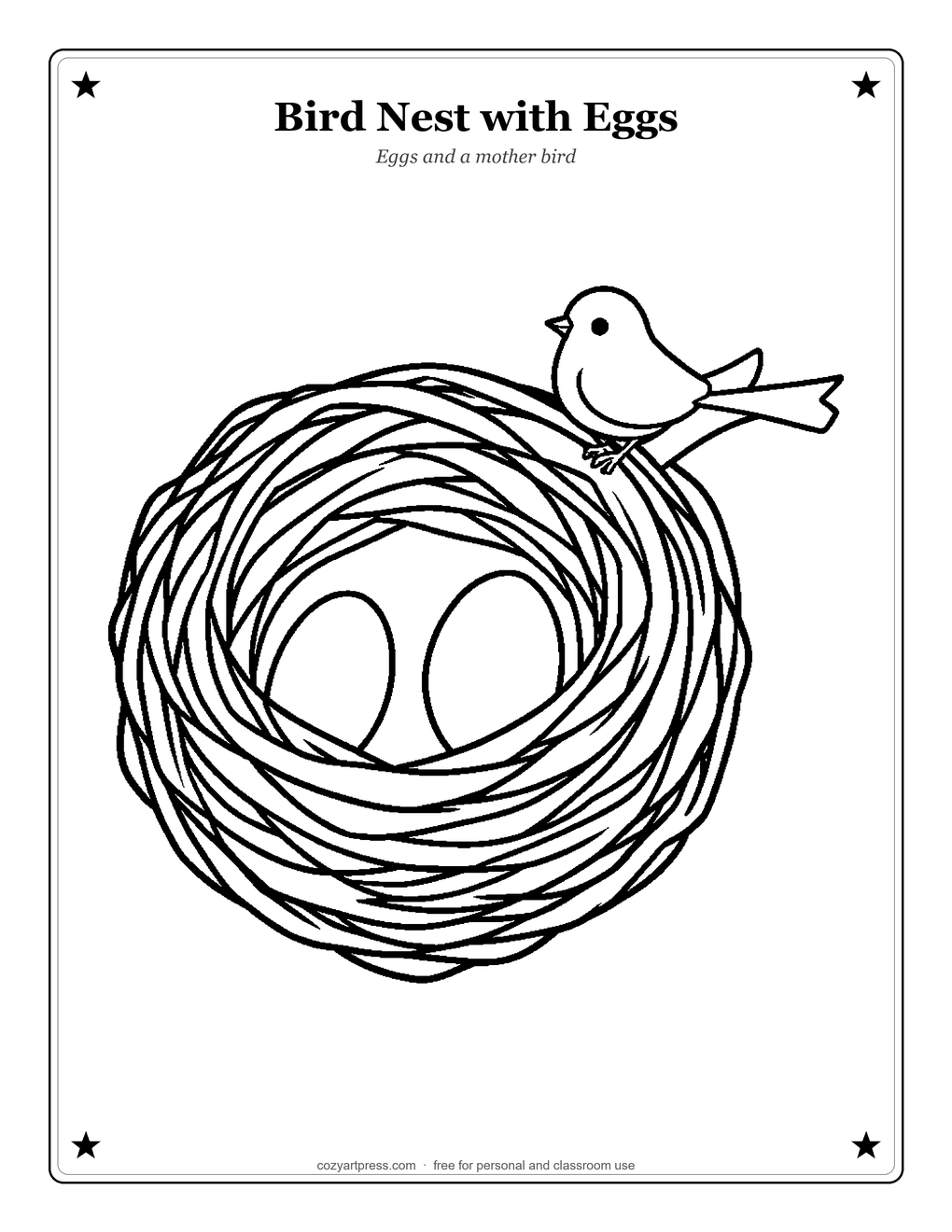
| Bird Nest with Eggs | A woven nest full of small spaces | Ages 7 and up |
The nest page looks simple at first glance. All those crossing twigs make it the slowest page in the set, which is good news for an older child who wants something to work at.
02 —Real Colors, Bird by Bird
Coloring a bird the way it looks in nature turns the page into a small science lesson. Here are the colors for the birds in this set, kept to the plain facts.
- Robin. The American robin has a gray-brown back and wings, an orange-red breast and a yellow beak. Robins hunt earthworms on lawns, which is exactly what this one is doing.
- Hummingbird. The ruby-throated hummingbird, the only hummingbird that nests in eastern North America, has a shiny green back. Adult males have a red throat that can look black in poor light.
- Flamingo. Flamingos are pink because of pigments in the food they eat, such as tiny shrimp and algae. Chicks hatch with white-gray fluff, show light pink by their first birthday and reach full color at two or three years old.
- Penguin. Black back, white front. In the water, the dark back blends in with the deep water when seen from above, and the white belly blends in with the bright surface when seen from below.
- Owl. Many owls are brown, gray and cream, with streaks and spots that hide them against tree bark.
- Parrot. Parrots come in many colors. Green is common, and macaws can be red, yellow and blue at once, so this page is the one place where any rainbow is correct.
- Duck. A mother mallard is mottled brown. The bright green head belongs to the male.
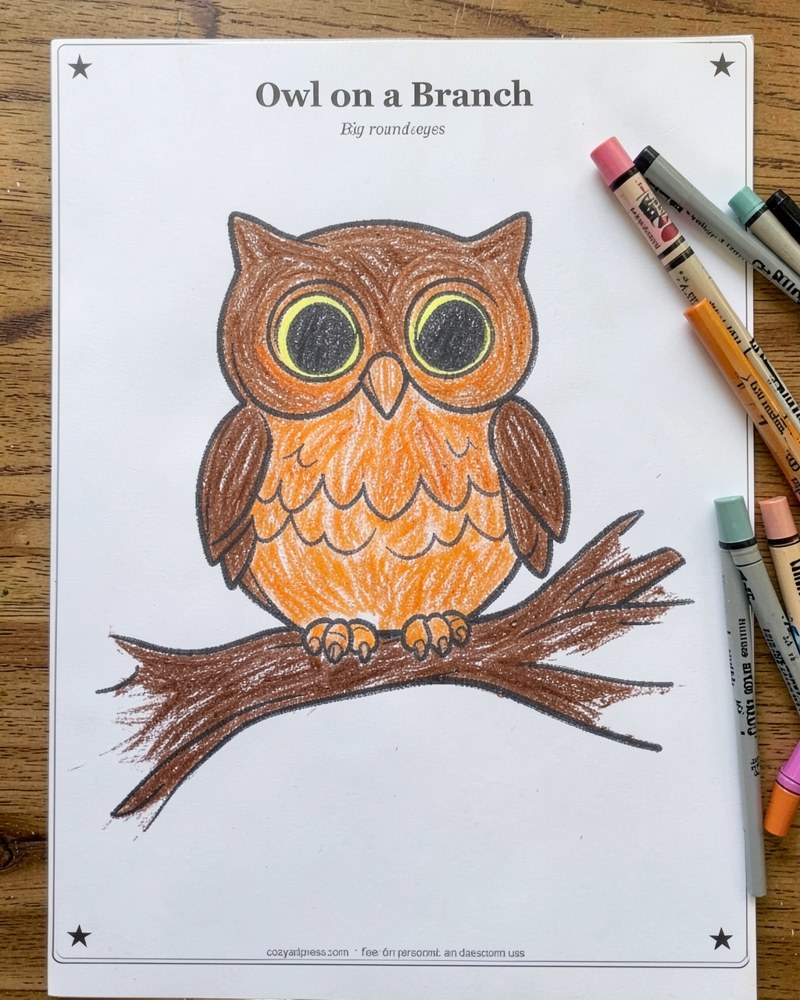
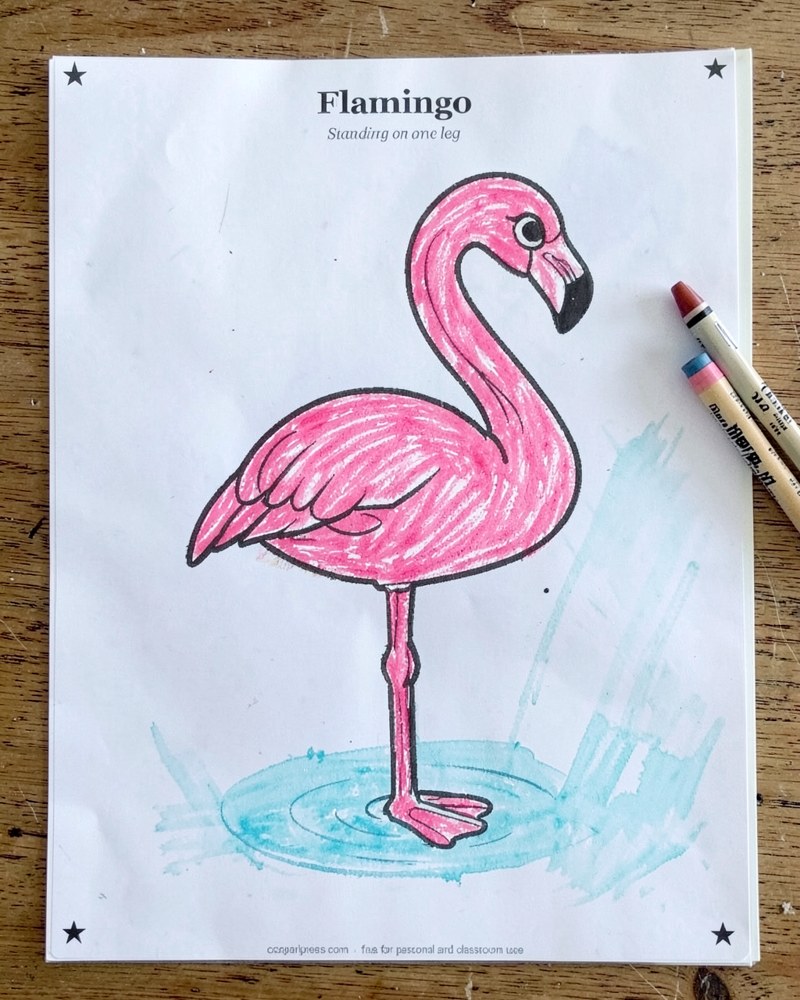
We colored these two samples digitally on the printable outlines to suggest palettes. They are not photographs of a child's page.
For the robin's eggs in the nest, there is a nice true detail: American robins lay sky-blue eggs. That shade has its own name, robin's egg blue.
03 —Watch Real Birds Out the Window
These pages work best next to a window. Birds come to almost every yard, park and schoolyard, and a child who has just colored a robin will start spotting robins.
- Pick a window with a view of a tree, a lawn or a feeder. Sit there for ten minutes at the same time each day. Mornings are often busier.
- Match a bird. When one lands, compare it with the pages. Is it big like the duck or small like the hummingbird? Does it have a red breast like the robin?
- Keep a tally. Write the names of the birds you might see on the back of a page, and add a mark each time one appears. After a week, count which bird visited most.
- Color what you saw. If a bird does not match any page, draw it on blank paper and color it from memory.
Do not expect to see a penguin or a flamingo out the window, of course. That opens a good question for the child: where do those birds live, and why not here?
Leave bird nests where they are, even when they look empty. The federal Migratory Bird Treaty Act makes it illegal to take or keep the nests, eggs or feathers of native wild birds without a permit; only a few introduced species, such as house sparrows, European starlings and pigeons, are not covered. The nest page is the way to study one up close.
04 —Easy Bird Facts for Coloring Time
Read one fact per page while the child colors.
- Owl. An owl cannot roll its eyes in their sockets the way we can. Instead it turns its whole head, up to about 270 degrees, three times farther than a person can. Most owls hunt at night.
- Robin. Robins often run a few steps, stop, tilt their heads and then pull up a worm.
- Hummingbird. A ruby-throated hummingbird beats its wings more than 50 times a second, so fast that the wings look like a blur. It can hover in one spot and even fly backward.
- Parrot. Parrots have two toes pointing forward and two pointing back, which helps them grip branches and hold food.
- Duck. Ducks spread oil from a small gland near the tail over their feathers. That keeps the feathers waterproof, so the duck stays dry on the pond.
- Penguin. Penguins cannot fly, but they are strong swimmers. Their wings work as flippers underwater.
- Nest. After the eggs are laid, a parent sits on them to keep them warm until they hatch.
- Flamingo. Flamingos often rest on one leg. A 2017 study found that their body can hold this pose with almost no muscle effort; whether it also saves body heat is still being studied.
05 —Comparing Beaks, Feet and Habits
- Sorting. Spread the eight pages out and sort them: birds that swim, birds that mostly fly, birds that cannot fly at all. The penguin is the surprise.
- Big and small. Line the birds up from the smallest (hummingbird) to the tallest (flamingo).
- Beaks. Look at each beak. The duck's is flat, the parrot's is hooked, the hummingbird's is long and thin. Talk about what each one is good for.
- Story page. On the duck page, ask where the family is going. On the nest page, ask what will hatch.
- Group work. Birds are one of the six groups in our animal classification sorting activity, which pairs well with the sorting game above.
06 —Kit for Coloring and Bird-Watching
The pages are set for US Letter; on A4, shrink them slightly in the print settings. Everyday printer paper handles crayons and pencils. If the flamingo or parrot is going to be painted, heavier paper keeps the sheet from rippling. The watching half of this activity costs nothing, though a couple of tools bring the birds closer.

Washable paint is easy on clothes and tables, and the flamingo and parrot pages have big areas that suit a brush. A feeder brings birds closer to the window, and binoculars help a child see the colors they just used. Remind children never to look at the sun through binoculars.
07 —More Birds to Color and Collect
Full-color bird art helps when a child wants to check a field mark before coloring. The sets here are from the bird, butterfly and bee clipart shelf, each by an independent designer; the robin and the bluebird are two of the birds most often seen in American yards.
Keep going with the butterfly coloring pages for the garden, the ocean animals coloring pages for a sea theme after the penguin, or the dinosaur coloring pages. Scientists consider birds the living descendants of dinosaurs, so that last set makes a good next step.