Learning
Animal Classification for Kids: Free Sorting Mats and 24 Cards
A free printable animal classification activity: two sorting mats for six animal groups, 24 animal cards, a clue sheet and an answer page. Six pages.
Our sheets are free. The clipart shown alongside them is sold on Creative Fabrica; those links are affiliate links; a sale may pay the gallery a commission.
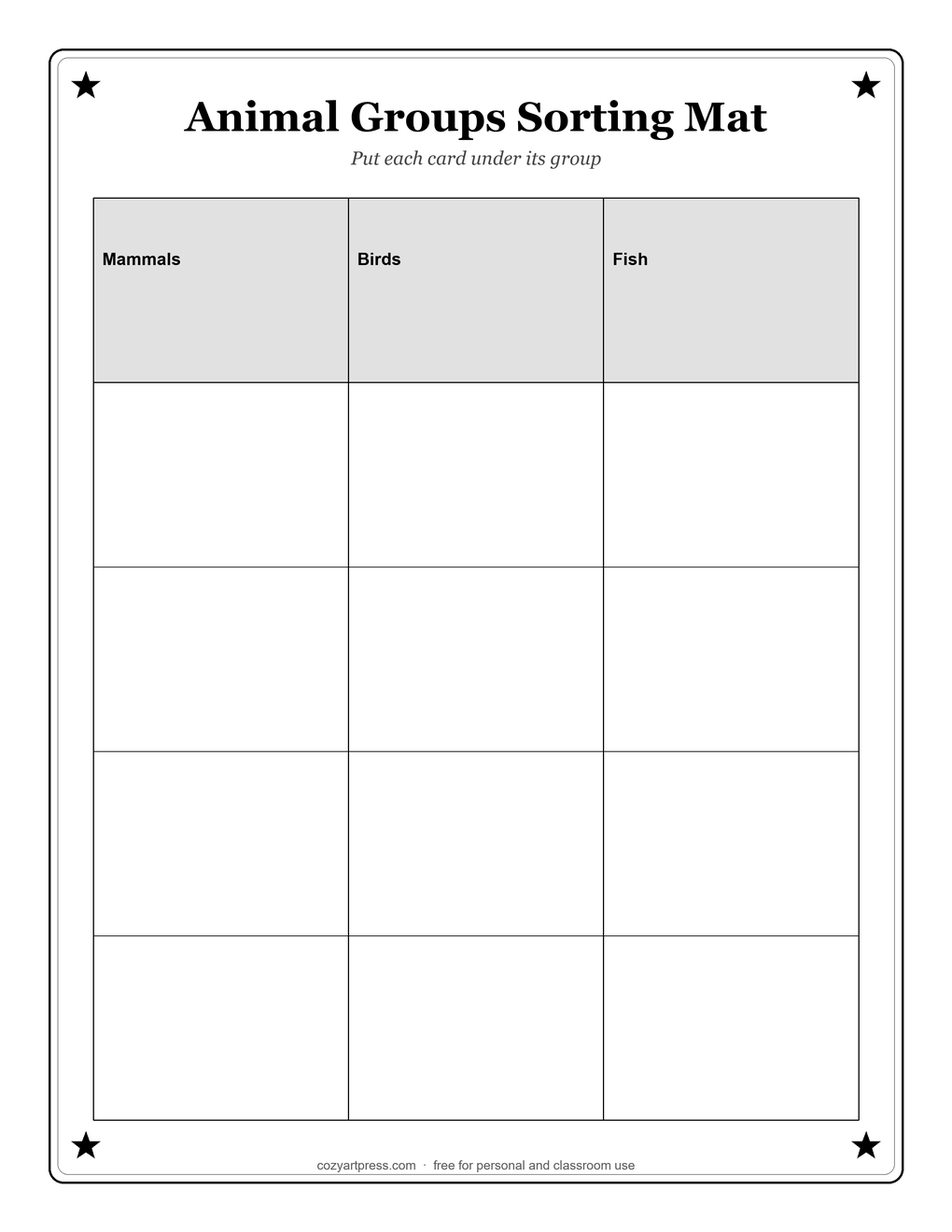
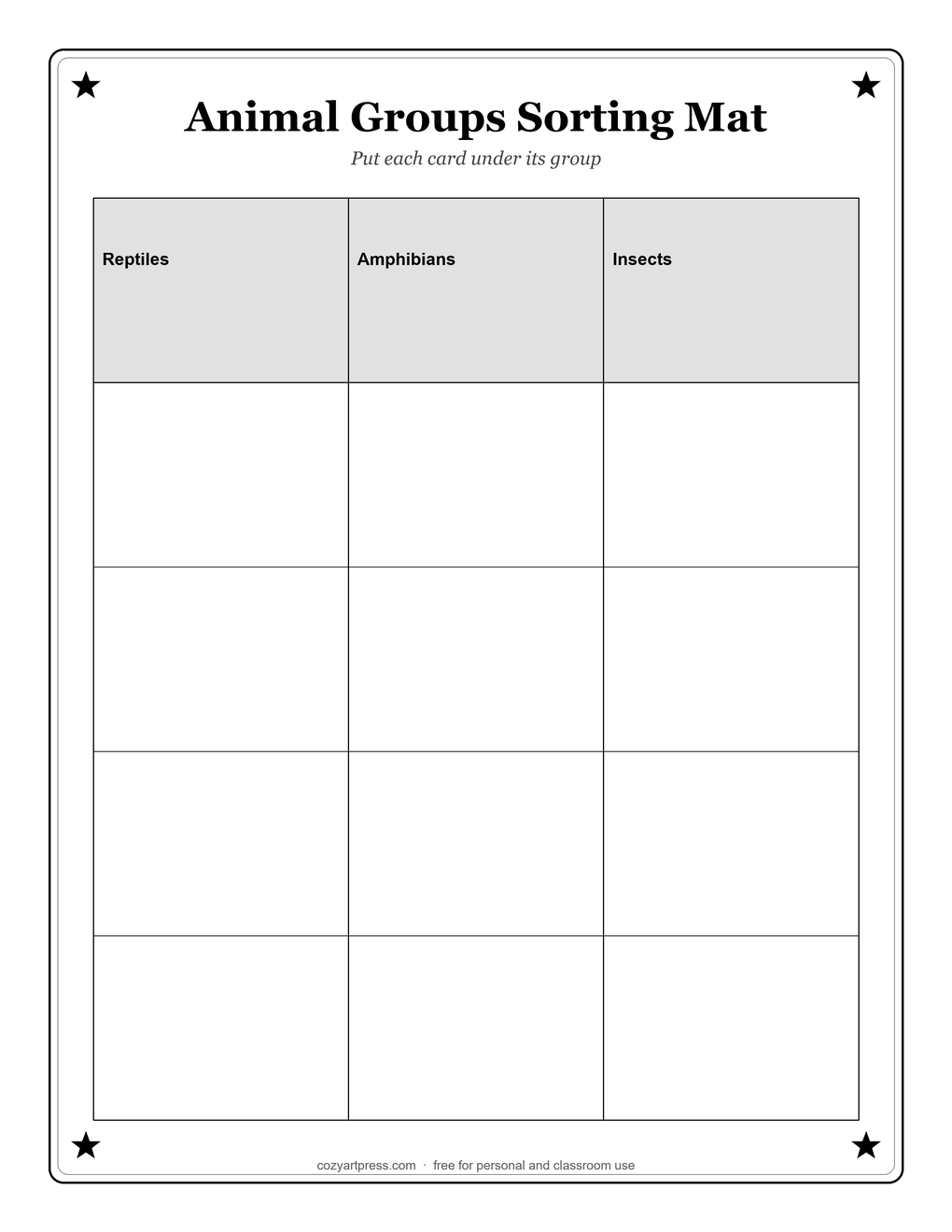
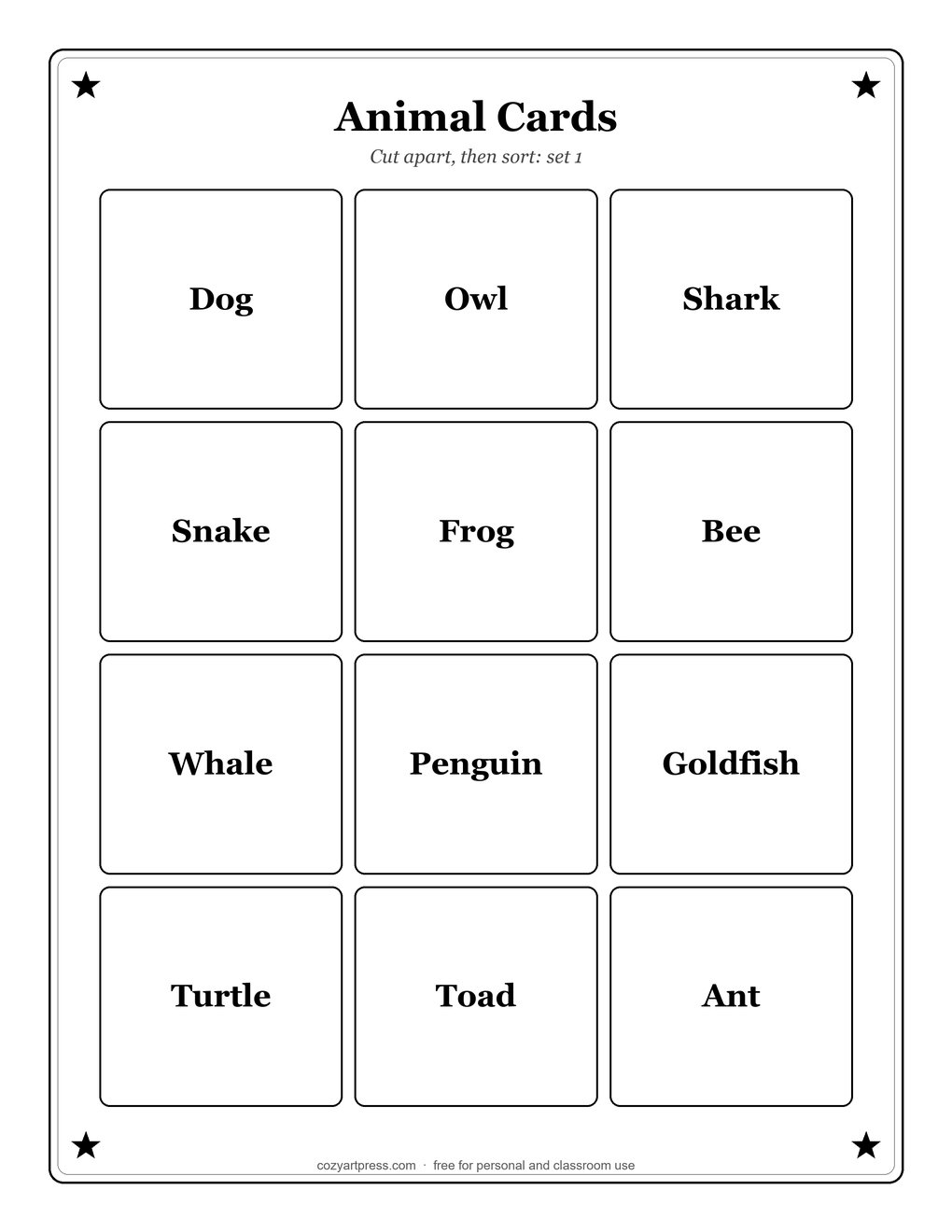
This animal classification activity for kids has 6 pages: two sorting mats with three columns each, two pages of animal cards to cut apart, a clue sheet and an answer page. Children sort 24 animals into six groups: mammals, birds, fish, reptiles, amphibians and insects. It prints in black ink on letter-size paper, and teachers and parents may copy it as often as they need.
Print the full set, or the pages you need.
Free PDF · 6 pages · US Letter
The sheets
Click a sheet to open its PDF. Print at 100% scale (or fit to page on A4).
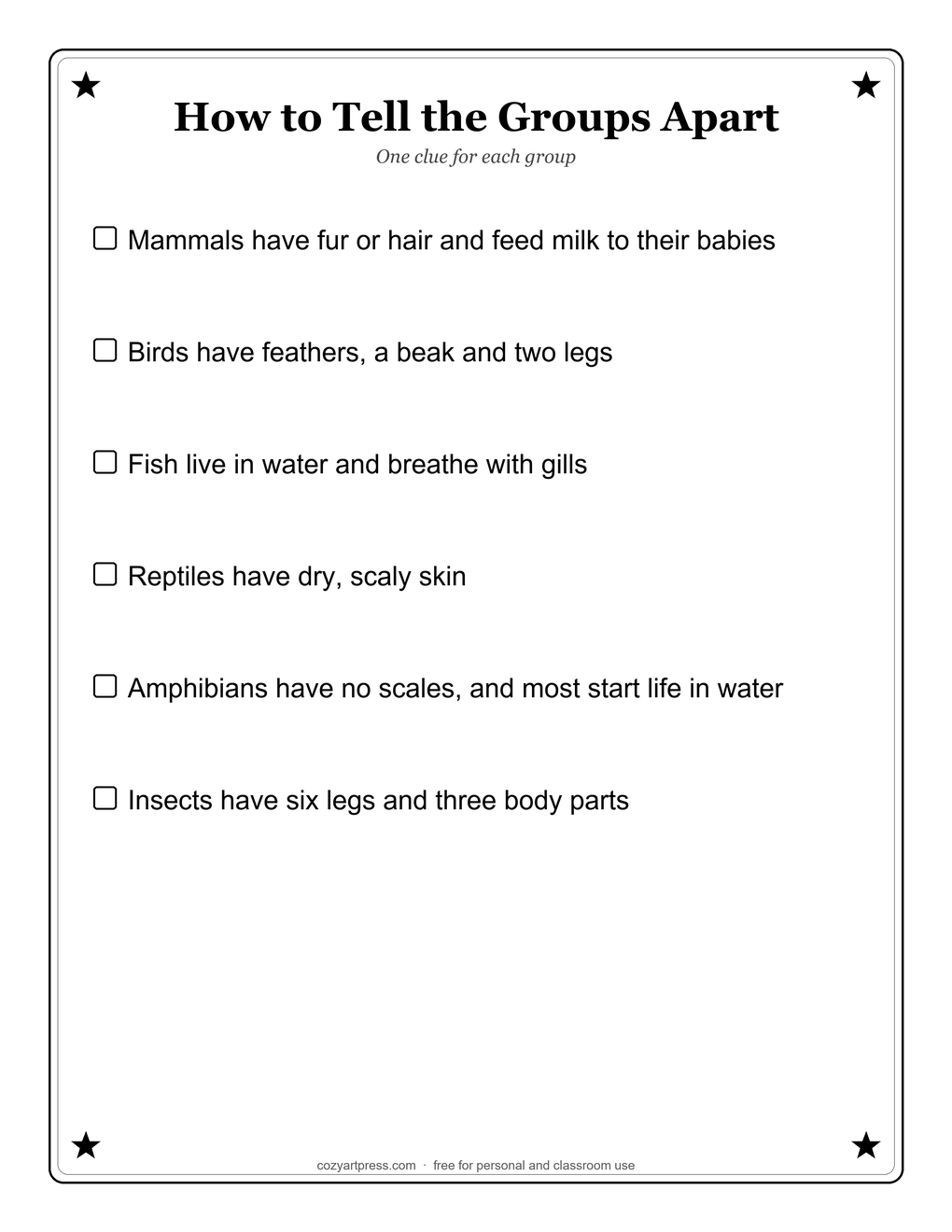
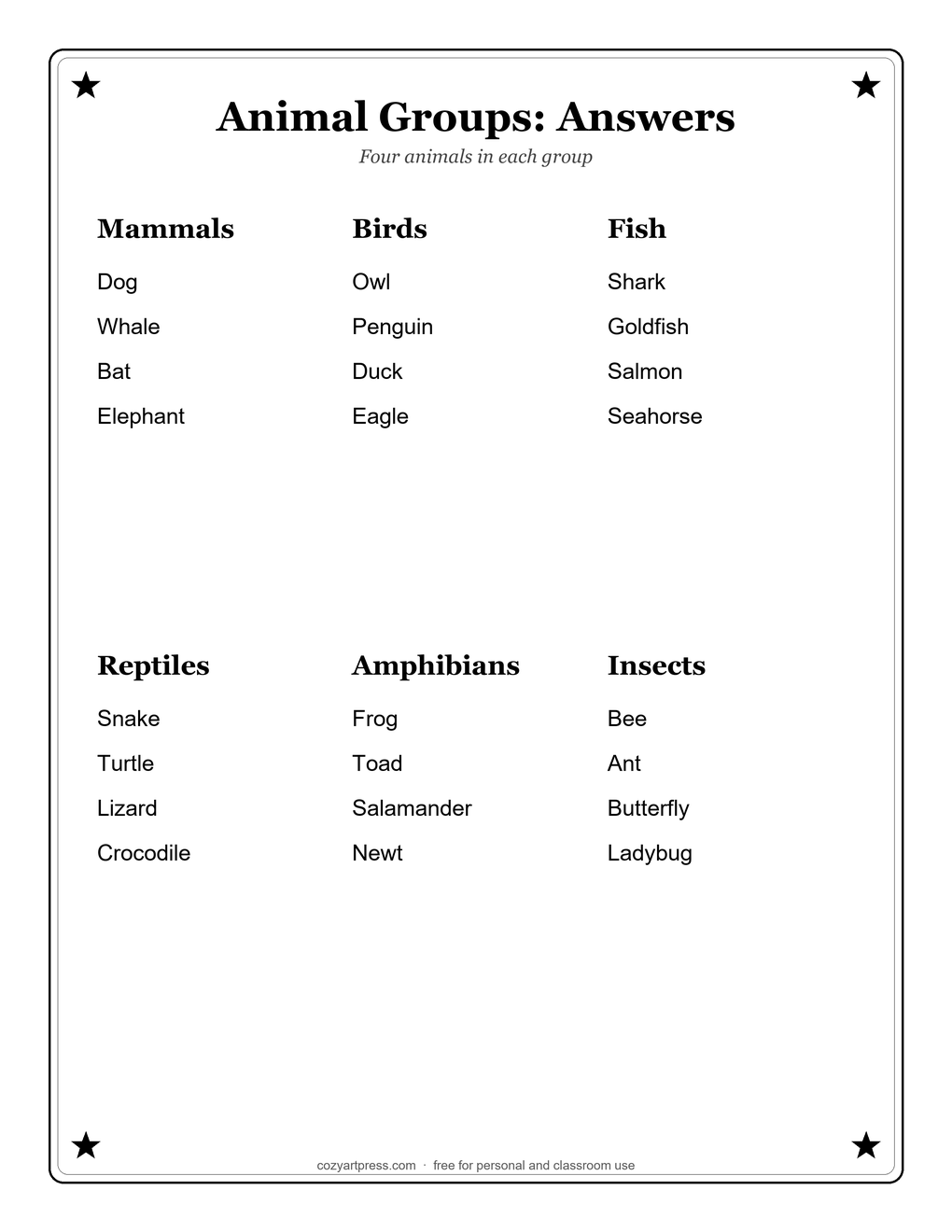
Download the whole set as one PDF — 6-page PDF: two mats, 24 cards, a clue sheet and the answers.
01 —The Six Pages
| Page | Contents |
|---|---|
| Sorting mat 1 | Columns for mammals, birds and fish |
| Sorting mat 2 | Columns for reptiles, amphibians and insects |
| Animal cards, set 1 | 12 cards to cut apart |
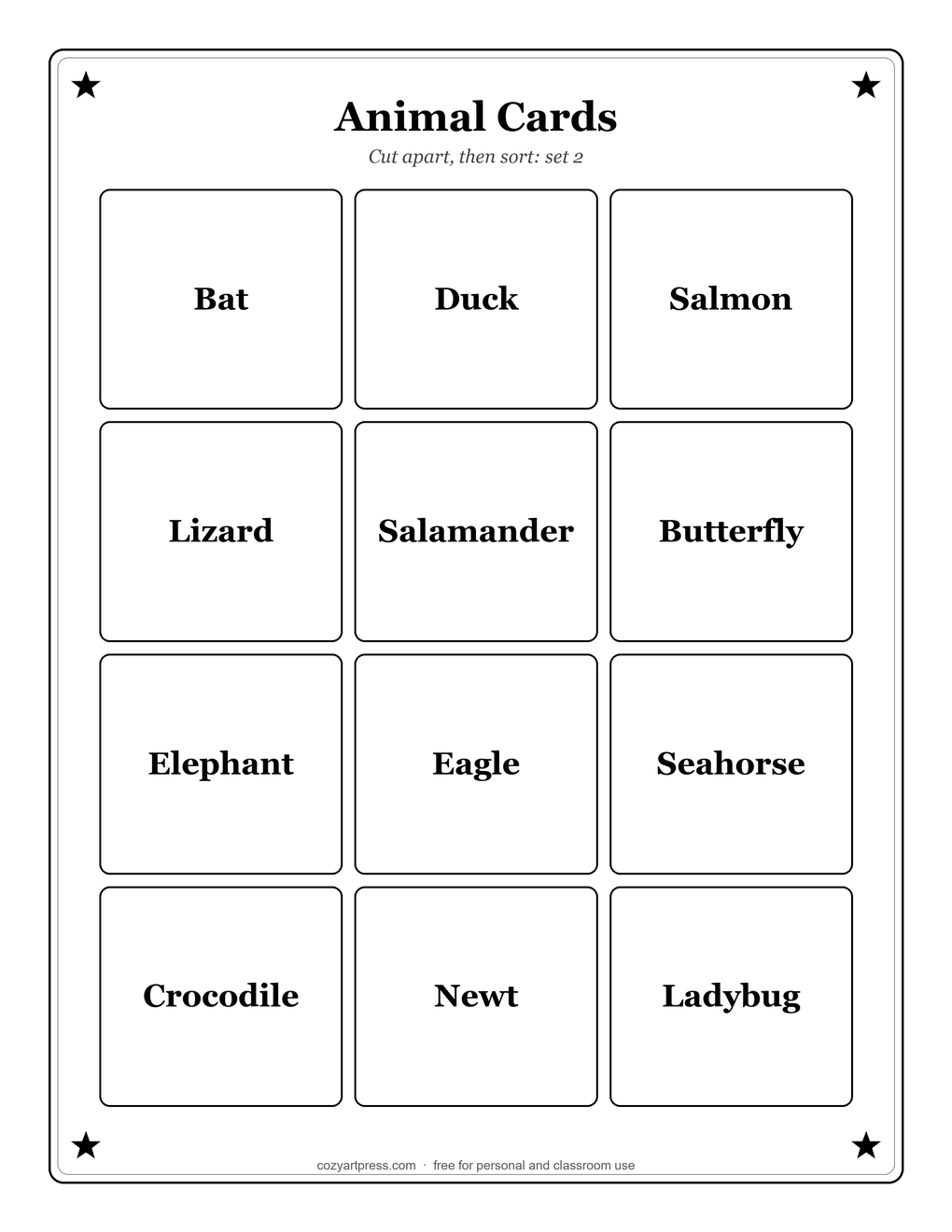
| Animal cards, set 2 | 12 more cards |
| Clue sheet | One clue for each group |
| Answers | Four animals under each group |
The cards carry the animal's name in large letters and no picture. A child has to think about the animal, not match a drawing.
02 —The Six Groups
The clue sheet gives one plain sentence for each group:
- Mammals have fur or hair and feed milk to their babies.
- Birds have feathers, a beak and two legs.
- Fish live in water and breathe with gills.
- Reptiles have dry, scaly skin.
- Amphibians have no scales, and most start life in water.
- Insects have six legs and three body parts.
These are starting points for young children, not the whole of biology. Scientists use many more groups, and there are always animals that surprise us. The first five groups here are the traditional groups of animals with backbones (scientists split fish into several groups of their own); insects are the group without a backbone that children meet most often.
03 —How to Do the Activity
- Print the two mats and the two card pages. Cardstock is best for the cards.
- Cut the cards apart. Each page gives twelve.
- Lay the two mats side by side so the six headings make one row.
- Read the clue sheet together, one group at a time.
- Sort the cards. The child picks a card, reads it and places it under a heading.
- Check with the answer page only at the end.
Each column has room for four cards, and there are exactly four animals for each group. If a column is full and a card is left over, something has been misplaced, and the child can hunt for the mistake.
04 —The Tricky Cards
The 24 animals were chosen to include a few that make children stop and think.
Whale. It lives in the sea, so most children put it with the fish. It is a mammal: it breathes air and feeds milk to its young.
Bat. It flies, so it lands with the birds. It is a mammal too, with fur and no feathers.
Penguin. It cannot fly and it swims. It is still a bird: it has feathers and a beak and lays eggs.
Seahorse. It does not look like a fish, but it is one, with gills and fins.
Turtle. With its shell, it does not look like a snake or a lizard, yet it is a reptile.
Salamander and newt. They look like lizards. They are amphibians: their skin has no scales, and they start life in water.
Toad. A toad's skin is drier and bumpier than a frog's, so children may want to call it a reptile. It has no scales, though, and toads lay their eggs in water and start life as tadpoles, so it is an amphibian.
When a card goes in the wrong column, do not correct it straight away. Ask "How do you know?" and read the clue for that group again. A child who works out why a whale is not a fish will remember it.
05 —Easier and Harder Versions
Easier, for ages 4 to 5. Use only the first mat, with mammals, birds and fish, the most familiar groups. The two card pages are mixed, so first pull out the twelve cards that belong on it: dog, whale, bat, elephant, owl, penguin, duck, eagle, shark, goldfish, salmon and seahorse.
Standard, for ages 6 to 8. Use everything, as described above.
Harder, for ages 8 and up.
- Sort without the clue sheet, then write a clue for each group in your own words.
- Add animals of your own on blank slips of paper: a shark is in the set already, but what about a dolphin, an ostrich, a tadpole?
- Find an animal that fits none of the six groups. A spider has eight legs, so it is not an insect. Neither is a worm, a snail or a crab.
That last question is the best one. It shows children that the six groups are a beginning.
06 —More Games From the 24 Cards
- Two truths. One player picks a card and gives two true clues about the animal. The others guess the group, then the animal.
- Odd one out. Lay down three cards from one group and one from another. Which does not belong, and why?
- Group race. Call out a group. The first player to find a card from it keeps the card.
- Memory. Lay the 24 cards face down. A pair is two animals from the same group.
07 —In a Classroom
The activity fits a science unit on living things. As a center, it takes one table: two mats, one set of cards and the answer page folded inside an envelope.
For a whole-class version, tape six headings to the board and give each child one card. Children come up one at a time, place the card and say one reason.
08 —Making the Set Last
Print the cards on cardstock so they survive many rounds, and keep them in a labeled envelope. Laminated mats can be wiped and reused. Printing on A4 works if you let the printer scale the page down slightly.
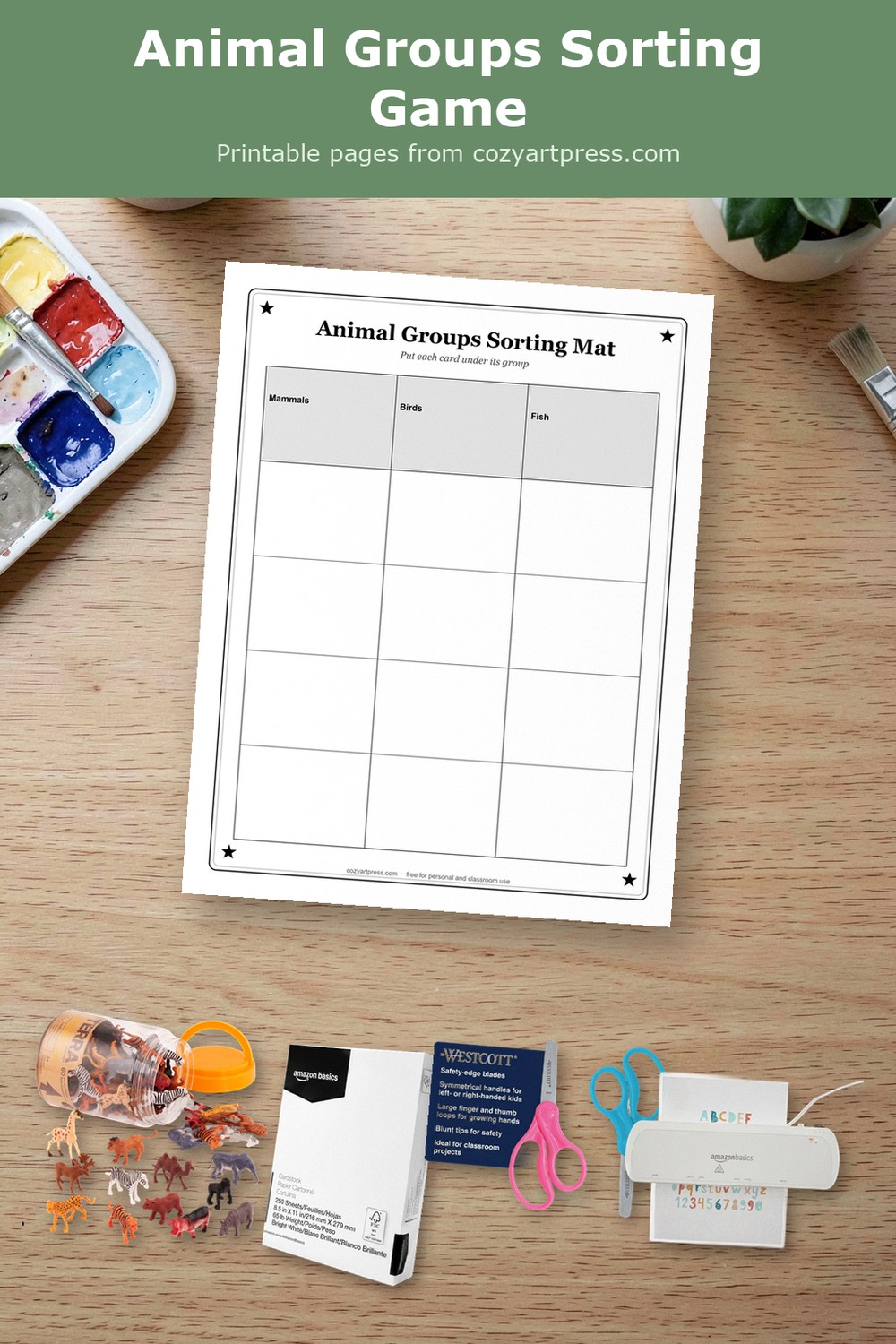
Small animal figures can be sorted on the same mats, which helps children who do not read yet.
09 —Add Pictures to the Cards
To make picture cards, print small clipart and glue one image above each word. Independent designers on our bird, butterfly and bee clipart shelf made the three sets shown here, which cover the birds and insects.
10 —More Animal Activities
After the sorting, test the facts with our animal riddles or the animal trivia questions. More free sheets are gathered on the printables page.

